
Microneedling for Melasma and Dark Patches
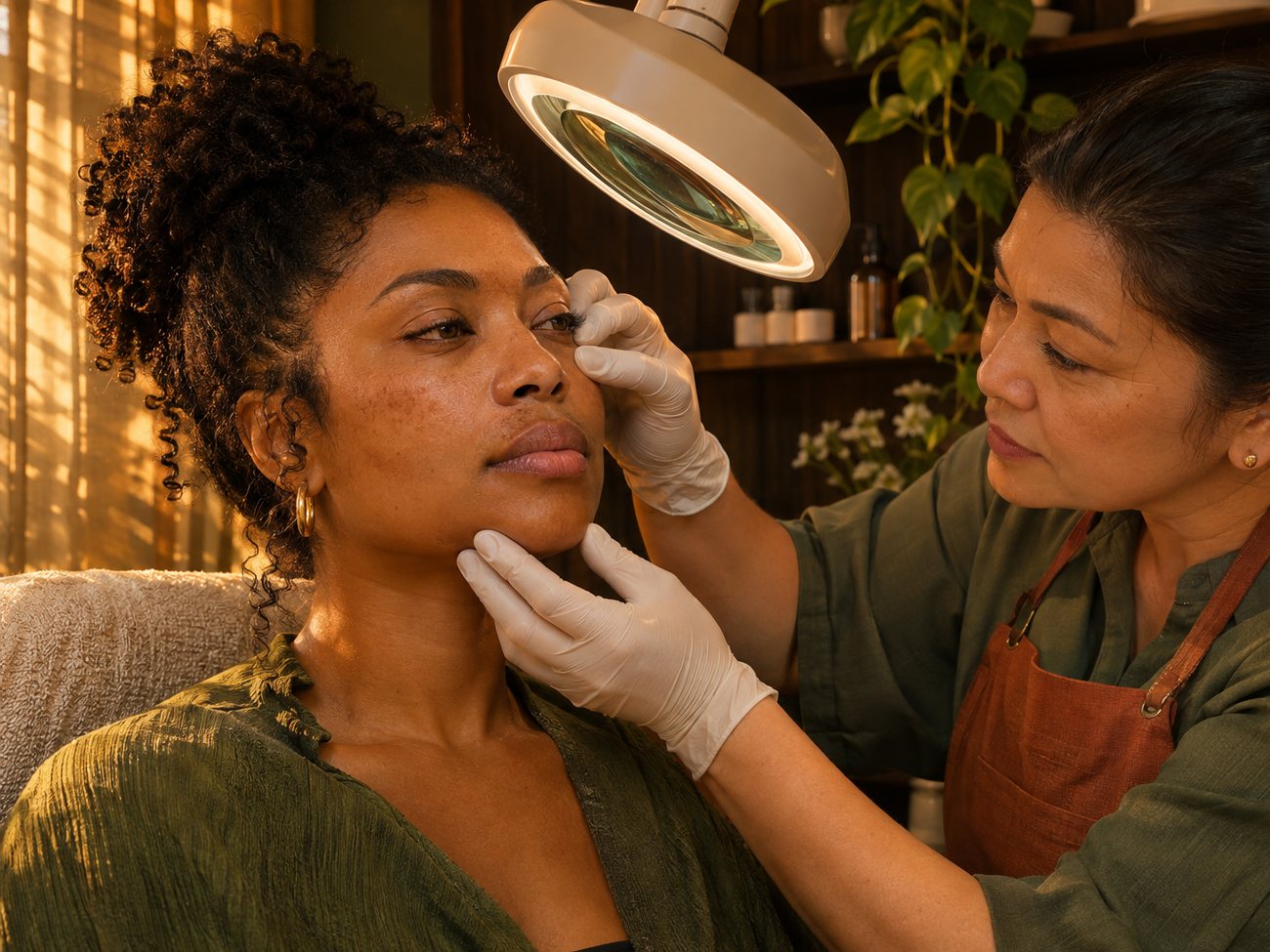
Microneedling is used on melasma and dark patches. This page sticks to what one published comparison found and what to plan for before you book.
What the treatment is meant to leave
The goal is less visible pigment. In a study hosted on pmc.ncbi.nlm.nih.gov, microneedling with tranexamic acid and vitamin C demonstrated superior pigment reduction, higher patient satisfaction, and fewer side effects than a 15% TCA chemical peel.
For background on the condition itself, Harvard Health has an A-to-Z entry on melasma (chloasma).
What the study found
The study reports that both 15% TCA chemical peeling and microneedling with tranexamic acid and vitamin C are effective in treating moderate to severe melasma. Read it as a comparison between two procedures.
Where pigment treatments go wrong
The study says microneedling may be considered a safer and more effective first-line procedural therapy, particularly for individuals with darker skin phototypes prone to postinflammatory hyperpigmentation.
That names the failure to watch for: pigment that worsens after treatment in skin prone to it. Ask your provider how your skin tone changes the plan. Keep home devices out of this decision, and read the page on at-home microneedling at aad.org before buying one.
What follow-up adds up to
A pigment treatment is not finished when the session ends. Add the recovery period and any repeat sessions your provider plans to the price, and ask what each one costs.
Ask whether your skin tone changes the plan
Ask whether your skin tone changes the plan, and what the provider does if pigment worsens. Healthline's notes on microneedling aftercare and healing stages and on microneedling with PRP are useful to have read before that conversation.