
Dermarollers at Home Versus Clinic Microneedling
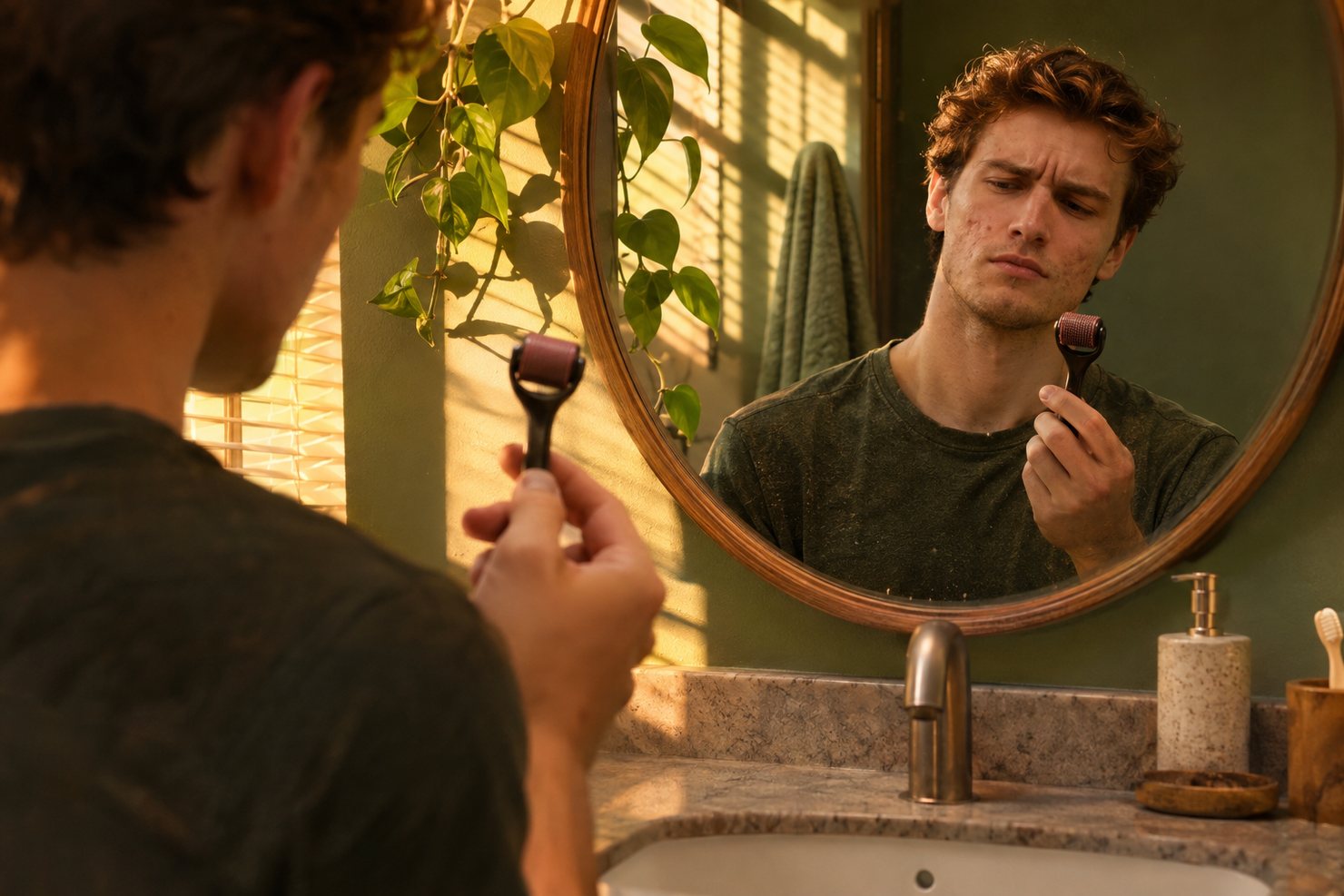
A roller and a clinic session share a name and not much else. This page sets out what each reaches in the skin and what that means for the results you pay to keep.
What a clinic session is aiming for
www.dermatologytimes.com states that dermal collagen induction requires penetration into the papillary or reticular dermis.
If you are weighing a device against a visit, start with the page on at-home microneedling at aad.org.
What home devices actually reach
According to www.dermatologytimes.com, home devices of 0.25 to 0.5 mm or less mainly affect the stratum corneum or the superficial papillary dermis, which favors exfoliation and product penetration.
Where the mismatch begins
The disappointment starts when a home roller is expected to match a clinic result. The aad.org says products sold for at-home microneedling, and microneedling done in a non-medical spa, are not meant to puncture the skin. It adds that these gentler products lead to less noticeable results than those you get from a dermatologist.
For the clinic side of that comparison, aad.org also explains how microneedling can fade scars and uneven skin tone.
Count both routes honestly
Compare what each route is built to do, not the shared word microneedling. A device that exfoliates and helps products penetrate delivers a different result from one that reaches the dermis. Price each route against the result it can reach.
Before you choose
Decide first which result you want. If the goal is collagen induction, plan around a provider who works at that depth. If you go the clinic route, the healing is covered in Healthline's microneedling aftercare and healing stages, and an extra you may be offered is explained in its page on microneedling with PRP.